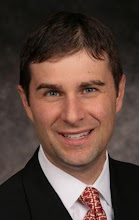
Below I cover fiscal facts you can verify, and then make three promises to you that you will be able to verify if I run for re-election in four years.
FISCAL FACTS
1. Utah County’s expenditures have grown twice as fast as our population the last five years. Utah County’s expenditures have grown 68% in the last 5 years, from $51.04 million (in 2003) to $85.78 million (in 2008).[1] During that same time, Utah County’s population only grew 29.6%, from 409,000 to 530,000.[2]
2. Commissioner Anderson has supported these increases in the budget. Shortly after Commissioner Anderson was sworn in for his third term, he approved amending the budget to increase it by 7% in 2007,[3] and then was the deciding vote (by 2 to 1) to approve a substantial 14% increase to the 2008 budget.[4] This rapid increase in spending led the Utah County Auditor to warn in 2008 that such expenditures would deplete the surplus (or general fund) and created a budget situation that “will not be sustainable in subsequent years without either new revenue sources or increased revenue from existing sources.”[5]
3. Commissioner Anderson voted to increase his salary by 10% in 2008. Commissioner Anderson was the deciding vote (by 2 to 1) to increase the salary of the Utah County Commissioners from $94,700 to $108,000 in June 2008.[6] In November 2009 I suggested this salary increase be rolled back to ease the burden on tax payers, and was rebuked by Commissioner Anderson.[7] Note that the salary of the County Commissioner has been increased from $82,000/year to $108,000/year in the last four years.
4. Commissioner Anderson voted for the largest combined sales tax increase in Utah County’s history that was not approved by the voters. In August 2007, Commissioner Anderson voted to increase the voter approved 0.25 percent sales tax for transportation (2006) by 20% up to .30 percent in 2007.[8] Further Commissioner Anderson voted in September of 2008 to further increase it by almost 100% more to .55 percent. [9] We certainly need transportation projects, but I believe any sales tax increase should be put before the voters so they can determine if it is justified.
5. Property Taxes Increased in 2008 and 2009: Utah County’s property taxes had stayed relatively modest and stable until 2008, when Utah County received a windfall due to the Utah State Tax Commission allowing a one time change in the assessing and collecting rate without going through the truth-in-taxation process, which resulted in the Utah County’s property tax revenue going from $25,430,082 to $30,299,437 from 2007 to 2008, or a 19% increase, in a single year.[10] It would have been responsible to either return this windfall to the taxpayers, or at least save it, but instead it was immediately spent on the growing budget. Because the surplus had been used up, Utah County then had to raise property tax rates by 8.5% in 2009[11] when our property values declined so Utah County could collect the same amount of revenue, even though it means they were now taking a larger percentage of your home’s value, or a bigger piece of the pie.
6. $40 million in new debt for the Convention Center in Provo: We can have honest disagreements on the Convention Center, including whether it is the proper role of government, why Utah County is paying $40 million for the Convention Center while Provo is only paying approximately $7 million, and whether the private sector would have built a convention center for our County in Pleasant Grove. But we cannot debate that the taxpayers of Utah County are paying for the Convention Center, because they clearly are on the hook for the Convention Center. According to the Preliminary Offering Statement used to sell the Convention Center debt to investors, the annual debt service on the Convention Center will be paid as follows: 7% from the tax on hotel rooms, 11% from the tax on car rentals, and 82% by the one percent tax on restaurant food in Utah County.[12] While the tax on hotel rooms and car rentals are typically paid by visitors from out side our County (while also being paid by local businesses bringing in clients and employees), the tax on restaurant food in Utah County is paid overwhelmingly by the residents of Utah County, the Utah Restaurant Association and most informed observers believe at least 80% of the restaurant tax is paid for by the residents of Utah County.[13] Bottom Line: While tourists and business will generate up to 40% of the revenue to cover the debt service on the Convention Center, the tax payers of Utah County will pay most of the cost of the Convention Center. Furthermore, without the Convention Center’s debt service, the restaurant tax could be decreased substantially, easing the tax burden on our residents. The Daily Herald recently analyzed the claims that taxpayers will not pay for the Convention Center, and concluded that "local people are on the hook" [14] for the Convention Center.
Finally, I make three promises to you that you will be able to verify if I run for re-election:
1. I will vote against any budget that includes an increase in the property tax rate in the next four years. Our citizens and businesses have to live within their means. It is time for Utah County to do the same.
2. I will vote against any budget that includes the 2008 salary increase from $94,700 to $104,000 for the County Commissioners, and vote against any salary increase for Commissioners in the next 4 years. Everyone is doing more with less. It is time for our Commissioners to lead by example.
3. I will not run for more than two terms as a Utah County Commissioner. Our founding fathers understood the problems with any individual accumulating too much power, and becoming a career politician. I believe no one should serve in any Executive Branch position for more than two terms, and that includes our County Commissioners. In contrast, my opponent is asking you for a fourth term in office.
Thank you very much for engaging with me in an informed discussion of these issues. Please don't hesitate to call or email me to discuss further. My mobile is 801-368-5358 and my email is "Joel@ElectWright.com".
Warm Regards,
Joel Wright
SOURCES
[1] Numbers from 2004 to 2008 available at http://www.sao.state.ut.us/lgr/county/2008/08xbutco.pdf , 2009 numbers from http://www.sltrib.com/utahcounty/ci_13862040 (Note that final official expenditures for 2009 are not yet available.)
[2] See http://www.census.gov/
[3] 2007 Lower budget was approved in 2006, but subsequently amended after Commissioner Anderson came into office in 2007, see: http://www.sao.state.ut.us/lgr/county/2008/08xbutco.pdf
[4] See the Minutes from the December 18, 2007 Utah County Commission Meeting, Item #26: http://www.co.utah.ut.us/Dept/COMMISH/Data/Minutes/CM/2007/121807-CommissionMinutes.pdf
[5] See page 9 of the 2008 Financial Statements from the Independent Auditor here: http://www.sao.state.ut.us/lgr/county/2008/08xfutco.pdf
[6] See the Minutes from the June 17, 2008 Commission Meeting, Item #1: http://www.co.utah.ut.us/Dept/Commish/data/minutes/CM/2008/061708-CommissionMinutes.pdf ; see also the Deseret News article dated June 18, 2008: http://www.deseretnews.com/article/700235619/Utah-County-commissioners-hike-pay.html
[7] See the blog of Daily Herald reporter Joe Pyrah here: http://sausagegrinding.blogspot.com/2009/11/game-on.html
[8] See Item #22 on the August 28, 2007 Commission Minutes at: http://www.co.utah.ut.us/Dept/Commish/data/minutes/CM/2007/082807-CommissionMinutes.pdf
[9] See item #17 on the September 23, 2008 Commission Minutes at: http://www.co.utah.ut.us/Dept/Commish/data/minutes/CM/2008/092308-Commission-Minutes.pdf
[10] See page 46 of the 2008 Financial Statements here: http://www.sao.state.ut.us/lgr/county/2008/08xfutco.pdf
[11] Such information not yet available in official Financial Statements, but available on every property tax notice in Utah County. The Utah County Tax Levy was .000809 in 2008, and increased to .000878 in 2009, which is an 8.5% increase.
[12] Copy of the Preliminary Financial Statement (page 3) obtained from Utah County in February 2010 through a GRAMA request. Email Joel Wright at Joel@ElectWright.com if you would like a copy of it.
[13] The Utah Restaurant Association told me that at least 80% of the restaurant tax is paid for by the residents of Utah County, and likely over 90%. I have also had conversations with Commissioners Anderson and White, as well as Rep. Frank who tried to repeal this tax earlier this year, and they all have said to me that approximately 80% of the restaurant tax is paid for by Utah County residents.
[14] See: http://heraldextra.com/news/opinion/article_2073d488-45d9-584f-aeb3-8afc395c6a9d.html
Monday, June 14, 2010
Thursday, June 10, 2010
Editorial in the Daily Herald on Property Tax Increase
http://heraldextra.com/news/opinion/editorial/article_77bb338c-f144-5955-bc27-7da5900a4cbe.html
In Our View
Utah County tax semantics
Posted: Thursday, June 10, 2010 12:05 am
A tax hike is a tax hike is a tax hike. Or is it?
County Commissioner Gary Anderson and challenger Joel Wright have been scrapping over whether Utah County taxes have or haven't gone up. You'd think the answer would be obvious, but in the weird, wonderful world of property taxes it all depends on what you mean.
Wright says homeowners are paying a higher rate -- 8.5 percent.
Anderson replies that county homeowners overall are not actually paying a higher amount.
The value of most homes across Utah Valley has been dropping. When that happens, Utah law allows the county to raise the rate so that it takes in the same amount of revenue. So, legally, there's no tax hike.
It's true that most people aren't writing a bigger check to the county for their taxes, because the decline in home value offsets the rate hike. The bottom line is the bottom line, or so that argument could go. If you aren't paying more, you aren't paying more, and that's that.
It's a valid argument, but will it resonate with voters?
Well, that depends. For example, imagine that you go to a department store, and plan to buy $100 worth of clothing. Let's say the sales tax is 6 percent, so you expect to pay $6 in sales taxes. At the register, however, the clerk says there's a big sale, so the clothes only cost $50. Great! you think; and I'll only owe $3 in sales tax. That's a win-win.
But suppose the clerk still charges you $6 in sales tax. You'd be furious because that would bump the rate to 12 percent. It wouldn't help your mood if the clerk said, "Why are you complaining? You're still paying the same amount overall for your purchase, including the tax. And the government really needs the money."
Or imagine that your income dipped but the federal government increased the tax rate so that you paid the same amount as you did at your old salary. You'd howl. It would be little consolation that your check to the IRS was for the same amount as the year before.
Utah County taxpayers might feel the same way. At least on paper, they've lost wealth if the value of their houses declined. So it may grate to pay a higher tax rate.
Of course, what's even more irksome is that the last decade has exposed property tax assessments as fiction. Many houses in Utah Valley saw their theoretical value soar after about 2001, only to plunge when the recession struck. The only known, concrete value of a house is whatever a buyer pays for it; the rest is guesswork. Having to pay taxes on those guesses looks less and less fair every year.
The more important issue is whether the county spends those taxes wisely. With the rate-amount issue clearer, it might be time for Anderson and Wright to further explain why they're the ones to keep county spending in line in the future.
When incomes fall or when real estate values decline, government spending should follow in the same direction. It's time to spend less -- a lot less. Where did the idea come from that government should largely be immune from the economic pain that is felt by the people in a downturn?


Wednesday, June 9, 2010
Op-Ed in the Daily Herald on Balancing UT County's Budget
http://heraldextra.com/news/opinion/utah-valley/article_9e824d44-9ad5-5910-bd5d-20ec67c14097.html?mode=story
Local Opinion
Challenger blasts Anderson record
Joel Wright | Posted: Wednesday, June 2, 2010 12:04 am
Utah County's government is now in its fourth year of spending more than it receives. This approach is not sustainable, and has dangerously depleted the financial reserves of Utah County. Because Utah County is required by law to balance their budget every year, Utah County will have to raise property taxes, or engage in mass layoffs, once the reserves are gone.
How did this happen? I believe it happened due largely to the single vote of Commissioner Gary Anderson on two key occasions since he was elected to a third term in 2006.
The first occasion was in December 2007, when Anderson was the deciding vote to increase the County budget by 14 percent in a single year on a 2 to 1 vote. The increase led the Utah County Auditor to warn that such a budget was not sustainable, and would require a substantial increase in tax revenue. And since then, tax revenues have only declined.
The next occasion was in June 2008, when Anderson was the deciding vote to increase salaries for county employees on another 2 to 1 vote, including his own salary from $94,000 to $108,000 (even though his salary had been increased from $82,00 to $94,000 the year before). Just before this vote, Anderson stated that Utah County "may have to increase taxes at some point."
Anderson's statements about the need for a future tax increase have been consistent. In October 2007, Anderson said he "foresees a [tax] increase in perhaps three years given current trends" and then said in November 2008 he "doesn't see a way to avoid a tax increase." But there is a way, by simply refusing to raise taxes, and not spending more than you receive. Fortunately, the voters will get to choose in the Republican Primary Election on June 22 between Anderson's approach of raising taxes and spending, or my approach of living within our means.
Our county commissioners should be hoping for the best, and planning for the worst. Instead, they are planning for the best, and hoping they don't have to raise taxes, or cut spending, until after the election. At the commission meeting on May 11, it was announced that sales tax revenue would likely decline another 6.4 percent in 2010, and Utah County was running a deficit of approximately $5 million in 2010. A proposal was made to balance the budget by requiring co-payments on employee health insurance (like they do in the private sector), and cut the match on 401(k) contributions from 6 percent to 2 percent. Unfortunately this proposal was dismissed, and no other proposals were made to balance the budget. Instead of following the example of Utah's state government, it appears Anderson believes Utah County should follow the example of our federal government, and ignore the day of reckoning as long as possible, or at least until the election is over.
I experienced a similar situation when I joined the City Council of Cedar Hills in 2006. Cedar Hills had the highest property taxes in Utah County due to a failing city-owned golf course and a lack of commercial development (or sales tax base). During my time on the City Council we took on these problems. Our City Council approved a commercial development anchored by Wal-Mart that is now universally admired. Wal-Mart gave Cedar Hills a strong sales tax base, allowing Cedar Hills to decrease property taxes during the current recession. When I realized there were not enough votes to shut down our money-losing golf course, I worked with my fellow council members to turn it around. We hired new management, dramatically improving revenue from the golf course. We then created a plan to sell portions of the golf course for homes to eliminate the debt on the golf course.
A similar fresh approach is needed in Utah County. Our county commissioners must start spending less than they receive. We need leadership willing to make the hard decisions today, so we are not "forced" at some point to raise taxes. Most of all, we need county commissioners who will put the interests of the taxpayers first, and not base their budget decisions on the election cycle or campaign support.
• Joel Wright is a candidate for Utah County commissioner.
Monday, June 7, 2010
Insightful Blog on the American Fork debate on June 1, 2010
http://www.localcommentary.com/davidblog/2010/20100601.htm
Relevant portion below:
Introduction
American Fork's historic City Hall was the scene tonight of a debate among school board, county commission, US House of Representatives, and US Senate candidates who will be on the ballot for the June 22 primary. Hosted by the American Fork Youth City Council and competently moderated by American Fork City Councilor Shirl LeBaron, the event drew a standing-room-only crowd of more than 130, nearly all of whom stayed for the whole two hours.
The first hour, which I will discuss here, was devoted to candidates in all the races which have primaries, except the US Senate race. The second hour was entirely devoted to Republican Senate candidates Mike Lee and Tim Bridgewater and will be the subject of a separate blog post, which I will begin writing as soon as I have finished and posted this one.
In both hours, questions were written and submitted by the audience, then selected, combined, edited, etc., by the moderator. In the first hour, two minutes were allotted for each opening and closing statement, and one minute for each response by each candidate.
Disclaimers
First disclaimer: As usual here, I will not attempt to provide a detailed blow-by-blow account of the evening, let alone a transcript. I will summarize a lot, quote a little, analyze when the mood strikes, and simply ignore what I don't think was relevant or interesting. I'm not even trying to be chronological or comprehensive.
Second disclaimer: I walked in the door already having personal favorites in all races but one, the primary race for the US House seat from Utah's Second District, between Jim Matheson and Claudia Wright. (I won't be voting in that race at all.) In the county commission and senate races, I have actually cast votes for a candidate at either the county or state Republican convention. In the case of the school board race, one candidate's sign is on my lawn.
Despite my leanings -- some strong, some not -- I flatter myself that I have enough experience in campaign politics to allow some objectivity in evaluating candidates' performance at the event. And in case you're curious, I note that none of my preferences changed as a result of the evening's event, though the possibility existed.
Final disclaimer: What you get is here is what I think. I don't know and will not attempt to evaluate whether it will please you or any given candidate or not. If you disagree, or if I get something wrong, feel free to comment.
To communicate with candidates or view their Web sites, look them up in the Utah County candidates list.
.....
County Commission Seat A: Anderson vs. Wright (Republicans)
I didn't hear anything new in the county commission race. Overall, I'd give challenger Joel Wright an A- for the evening, and incumbent Gary Anderson a B+. In the interest of full disclosure, I note that I voted for Joel Wright at convention. (Four years ago, to be sure, I voted for Anderson.)
In his opening statement, Wright explained how the county commission seats work in Utah County; this was probably helpful to more than a few in attendance. There are three seats, two of which are up for election this year. All three are county-wide; they don't represent specific districts. Wright also said he wants to focus on regional issues, such as transportation and crime, which require attention on more than a city-by-city level. He also said nice things about limited government -- as did everyone else who spoke, I think, except possibly Ted Barratt, Jim Matheson's surrogate.
Anderson emphasized his support among the law enforcement community and his work in getting the county to address long-overdue transportation issues. He noted that he hasn't raised taxes, and he won't.
Here I must insert a disclaimer: Utah's truth-in-taxation law is perverse, as I've said before. It not only requires rate decreases (or unchanged rates) to be treated as tax increases in many cases; it allows candidates to claim that taxes weren't raised, even though rates went up. Anderson's approach to this is to proclaim his own purity of record and intent. Wright's is to use numbers to show that taxes increased even if there wasn't technically a tax increase. It's unnecessary complex and obscure, but it's the state legislature's fault, not these candidates'.
Wright insisted that there have been large increases in the county budget; Anderson says there have been no increases. Wright promises to roll back the latest pay increase for county commissioners; Anderson evaded this theme and talked about pay increases for county employees at large.
Wright said that a $40 million convention center should have been put to the voters, if it was going to be done at all.
Anderson boasted that Utah County has the lowest taxes and the smallest staff (per capita) among all Utah counties, then partly undermined his own argument by explaining that this is because Utah County doesn't have to provide municipal services, as many counties do. (The population of unincorporated portions of Utah County is very small.)
Wright promises not to serve more than two terms. Anderson says that if you ignore two terms he served in the last century, before returning to his law practice for a while, he's running for his second term right now.
Wright says the county government should just get out of the way of economic growth; Anderson sees a larger role for the county to play in economic development. (Presumably, this includes the convention center.)
Anderson emphasized his skill in bringing people together. He noted that mayors support him. In this vein, however, he went one step too far: He spoke of Utah Senator Howard Stephenson (the Utah Taxpayers Association's founder) reporting that Utah County is the best-governed county in the best-governed state in the Union. The inference was obvious, that this is partly to the incumbent's credit. Quite apart from the fact that I don't think these evaluations originated with Senator Stephenson, this opened the door wide for Wright to note that Stephenson has endorsed him, not Anderson.
I am rarely fazed by endorsements, but I am outright suspicious of claimed endorsements in Anderson's case. Prior to the county convention, he bombarded county delegates with e-mails naming a lot of people who endorsed him. Repeatedly, he had to send out a retraction later the same day, because he used a name without permission or claimed an endorsement from an organization that either hadn't endorsed him or could not do so.
If I were Joel Wright's campaign manager, I would have wanted to hear a little more substance from him. I thought he spoke more than necessary of principles and generalities, when it might have helped to display his command of details. Admittedly, the format -- lots of candidates, short responses -- doesn't easily lend itself to detail, but even so, there could have been more.
If I were Gary Anderson's campaign manager, I'd be telling him two things. First, if you want to call your opponent a liar, you ought to have something that sounds like a fact or two at your disposal, rather than simply making the thinly-veiled assertion. Second, his campaign comes across as a compilation of tried-and-true Utah County conservative slogans and some related button-pushing. Sometimes that's enough, perhaps. But in a year when people are actually listening, and his opponent's approach is markedly less shallow, and there's more than the usual anti-incumbent scent in the air, slogans and button-pushing probably aren't enough.
For what it's worth, Wright got more applause than Anderson tonight, though I got the impression that the voters there are not finished evaluating him. And though my support of Wright is a bit soft at this point, for reasons I'm not going to describe here, Wright did nothing to push me away tonight, and Anderson did nothing whatsoever to pull me away.
END
Daily Herald calls on Utah County to balance their budget
Great editorial from the Daily Herald below calling on Utah County to balance their budget now, and stop borrowing against the future by spending all of the reserves.
If elected, I would not hesitate to make the cuts necessary to balance the budget every year. That is what a Commissioner is hired to do, and you can hold me accountable for Utah County's budget.
http://heraldextra.com/news/opinion/article_219222f4-d3b6-51d4-954c-98e7d3417ecd.html
IN OUR VIEW
Utah County cuts
Posted: Tuesday, May 18, 2010 12:00 am
At some point Utah County will likely need to cut employee benefits to balance the budget.
Commissioner Steve White has been looking for a way to slash millions, and is right to do so. Which is less unpalatable, he asked: firing $5 million worth of employees or trimming their benefits?
Commissioner Gary Anderson pooh-poohed: "The last thing we want to do is harm the benefits of the great employees of this county," he said.
Eventually, however, White will be proved right. An interesting parallel lies across the pond, in Europe, where governments in Greece, Ireland, Portugal, Spain and Great Britain have either cut the pay of government workers or announced plans to do so.
In other words, in a era when the prime minister of Great Britain will cut his own pay by 5 percent, it's easy to imagine that a Utah County employee may soon have to chip in more for health insurance.
That's Europe, you say. But states, counties and cities across the U.S. are gushing red ink. The whole world is awakening from its government spending fantasy, and Utah County is not exempt. It can only try to limit the pain as much as possible.
Local government employees will be fortunate if the worst they must endure is stingier benefits.
* * *
Also on this subject: Sheriff Jim Tracy criticized White's comments -- not so much for their content but for the fact the commissioner made them in public.
"It ought to be between the department heads and not in the public," Tracy said.
Baloney. Understanding the county budget is an urgent concern for taxpayers, and it should be debated fully in the open. The whole idea of elected leaders making vital decisions behind closed doors needs to go.
Is Tracy for government secrecy?
Friday, June 4, 2010
Did UT County raise taxes? Article from Daily Herald
http://heraldextra.com/news/local/article_36b6249c-a5c4-5595-8a33-6ea25d7d1f06.html?mode=story#utpol
County Commission candidates spar over tax rate
Joe Pyrah - Daily Herald | Posted: Thursday, June 3, 2010 12:25 am
For months, GOP County Commission candidates have sparred over whether the county's portion of property taxes has been raised over the past three years.
Challenger Joel Wright says that the tax rate has increased 8.5 percent -- a tax increase. Incumbent Gary Anderson says a rate increase doesn't equal a tax increase if you don't pay any more.
With the collapse of the housing market, the values of homes across the county have been in flux, usually dropping. To keep county revenues flat, the tax rate must increase, even if the amount you pay doesn't.
"Either he's incredibly ignorant about the process, or he knows better and he's just using it for political purposes. And he knows better," Anderson said.
County Clerk/Auditor Bryan Thompson said that an official tax increase requires that someone pay more in taxes than the year before based on a combination of home valuation and tax rate. The county must then have a truth-in-taxation hearing as required by state law.
Utah County has not been required to hold one for the general budget in years.
"They can raise the rates to keep the revenues flat," said Charlie Roberts with the state Tax Commission. "The system is designed that way."
It's the state that sets the revenue-neutral tax rate for the county. Wright disagrees with the entire system, standing his ground that a rate increase equals a tax increase. If a home value drops, so should the amount residents pay, he says.
"It's just a difference in interpretation," Wright said. "I just don't respect very much the state mandate."
Even if he concedes a rate increase isn't a tax increase, Wright says the commission -- and Anderson -- should have cut deeper than they have given the general economic situation. The county has eliminated dozens of positions and taken early retirements over the past several years. But they haven't shown nearly the "modesty" of the state, schools and others, Wright says.
Anderson says the county already has one of the lowest tax rates in the state, comparable or lower salaries than other counties and fewer employees.
"We don't raise taxes in Utah County. We don't do that," he said.
That may be the case for general fund property taxes, but commissioners have raised a number of other taxes over the past three years.
The voters approved a quarter-cent sales tax increase for transportation. Commissioners increased that another quarter-cent by themselves for transportation because they were allowed by the state. They also increased the restaurant sales tax in the county to help cover the cost of a $40 million convention center that will be built in Provo.
They also increased the property taxes for the 10,000 or so residents who live in the unincorporated part of Utah County. That's in part because of a dust up with the state over other tax revenues, as well as to cover services like fire and policing that those who live in cities pay for through municipal taxes.
Editorial in the Daily Herald on Balancing UT County's Budget
http://heraldextra.com/news/opinion/utah-valley/article_9e824d44-9ad5-5910-bd5d-20ec67c14097.html?mode=story
Local Opinion
Challenger blasts Anderson record
Joel Wright | Posted: Wednesday, June 2, 2010 12:04 am
Utah County's government is now in its fourth year of spending more than it receives. This approach is not sustainable, and has dangerously depleted the financial reserves of Utah County. Because Utah County is required by law to balance their budget every year, Utah County will have to raise property taxes, or engage in mass layoffs, once the reserves are gone.
How did this happen? I believe it happened due largely to the single vote of Commissioner Gary Anderson on two key occasions since he was elected to a third term in 2006.
The first occasion was in December 2007, when Anderson was the deciding vote to increase the County budget by 14 percent in a single year on a 2 to 1 vote. The increase led the Utah County Auditor to warn that such a budget was not sustainable, and would require a substantial increase in tax revenue. And since then, tax revenues have only declined.
The next occasion was in June 2008, when Anderson was the deciding vote to increase salaries for county employees on another 2 to 1 vote, including his own salary from $94,000 to $108,000 (even though his salary had been increased from $82,00 to $94,000 the year before). Just before this vote, Anderson stated that Utah County "may have to increase taxes at some point."
Anderson's statements about the need for a future tax increase have been consistent. In October 2007, Anderson said he "foresees a [tax] increase in perhaps three years given current trends" and then said in November 2008 he "doesn't see a way to avoid a tax increase." But there is a way, by simply refusing to raise taxes, and not spending more than you receive. Fortunately, the voters will get to choose in the Republican Primary Election on June 22 between Anderson's approach of raising taxes and spending, or my approach of living within our means.
Our county commissioners should be hoping for the best, and planning for the worst. Instead, they are planning for the best, and hoping they don't have to raise taxes, or cut spending, until after the election. At the commission meeting on May 11, it was announced that sales tax revenue would likely decline another 6.4 percent in 2010, and Utah County was running a deficit of approximately $5 million in 2010. A proposal was made to balance the budget by requiring co-payments on employee health insurance (like they do in the private sector), and cut the match on 401(k) contributions from 6 percent to 2 percent. Unfortunately this proposal was dismissed, and no other proposals were made to balance the budget. Instead of following the example of Utah's state government, it appears Anderson believes Utah County should follow the example of our federal government, and ignore the day of reckoning as long as possible, or at least until the election is over.
I experienced a similar situation when I joined the City Council of Cedar Hills in 2006. Cedar Hills had the highest property taxes in Utah County due to a failing city-owned golf course and a lack of commercial development (or sales tax base). During my time on the City Council we took on these problems. Our City Council approved a commercial development anchored by Wal-Mart that is now universally admired. Wal-Mart gave Cedar Hills a strong sales tax base, allowing Cedar Hills to decrease property taxes during the current recession. When I realized there were not enough votes to shut down our money-losing golf course, I worked with my fellow council members to turn it around. We hired new management, dramatically improving revenue from the golf course. We then created a plan to sell portions of the golf course for homes to eliminate the debt on the golf course.
A similar fresh approach is needed in Utah County. Our county commissioners must start spending less than they receive. We need leadership willing to make the hard decisions today, so we are not "forced" at some point to raise taxes. Most of all, we need county commissioners who will put the interests of the taxpayers first, and not base their budget decisions on the election cycle or campaign support.
• Joel Wright is a candidate for Utah County commissioner.
Local Opinion
Challenger blasts Anderson record
Joel Wright | Posted: Wednesday, June 2, 2010 12:04 am
Utah County's government is now in its fourth year of spending more than it receives. This approach is not sustainable, and has dangerously depleted the financial reserves of Utah County. Because Utah County is required by law to balance their budget every year, Utah County will have to raise property taxes, or engage in mass layoffs, once the reserves are gone.
How did this happen? I believe it happened due largely to the single vote of Commissioner Gary Anderson on two key occasions since he was elected to a third term in 2006.
The first occasion was in December 2007, when Anderson was the deciding vote to increase the County budget by 14 percent in a single year on a 2 to 1 vote. The increase led the Utah County Auditor to warn that such a budget was not sustainable, and would require a substantial increase in tax revenue. And since then, tax revenues have only declined.
The next occasion was in June 2008, when Anderson was the deciding vote to increase salaries for county employees on another 2 to 1 vote, including his own salary from $94,000 to $108,000 (even though his salary had been increased from $82,00 to $94,000 the year before). Just before this vote, Anderson stated that Utah County "may have to increase taxes at some point."
Anderson's statements about the need for a future tax increase have been consistent. In October 2007, Anderson said he "foresees a [tax] increase in perhaps three years given current trends" and then said in November 2008 he "doesn't see a way to avoid a tax increase." But there is a way, by simply refusing to raise taxes, and not spending more than you receive. Fortunately, the voters will get to choose in the Republican Primary Election on June 22 between Anderson's approach of raising taxes and spending, or my approach of living within our means.
Our county commissioners should be hoping for the best, and planning for the worst. Instead, they are planning for the best, and hoping they don't have to raise taxes, or cut spending, until after the election. At the commission meeting on May 11, it was announced that sales tax revenue would likely decline another 6.4 percent in 2010, and Utah County was running a deficit of approximately $5 million in 2010. A proposal was made to balance the budget by requiring co-payments on employee health insurance (like they do in the private sector), and cut the match on 401(k) contributions from 6 percent to 2 percent. Unfortunately this proposal was dismissed, and no other proposals were made to balance the budget. Instead of following the example of Utah's state government, it appears Anderson believes Utah County should follow the example of our federal government, and ignore the day of reckoning as long as possible, or at least until the election is over.
I experienced a similar situation when I joined the City Council of Cedar Hills in 2006. Cedar Hills had the highest property taxes in Utah County due to a failing city-owned golf course and a lack of commercial development (or sales tax base). During my time on the City Council we took on these problems. Our City Council approved a commercial development anchored by Wal-Mart that is now universally admired. Wal-Mart gave Cedar Hills a strong sales tax base, allowing Cedar Hills to decrease property taxes during the current recession. When I realized there were not enough votes to shut down our money-losing golf course, I worked with my fellow council members to turn it around. We hired new management, dramatically improving revenue from the golf course. We then created a plan to sell portions of the golf course for homes to eliminate the debt on the golf course.
A similar fresh approach is needed in Utah County. Our county commissioners must start spending less than they receive. We need leadership willing to make the hard decisions today, so we are not "forced" at some point to raise taxes. Most of all, we need county commissioners who will put the interests of the taxpayers first, and not base their budget decisions on the election cycle or campaign support.
• Joel Wright is a candidate for Utah County commissioner.
Subscribe to:
Posts (Atom)